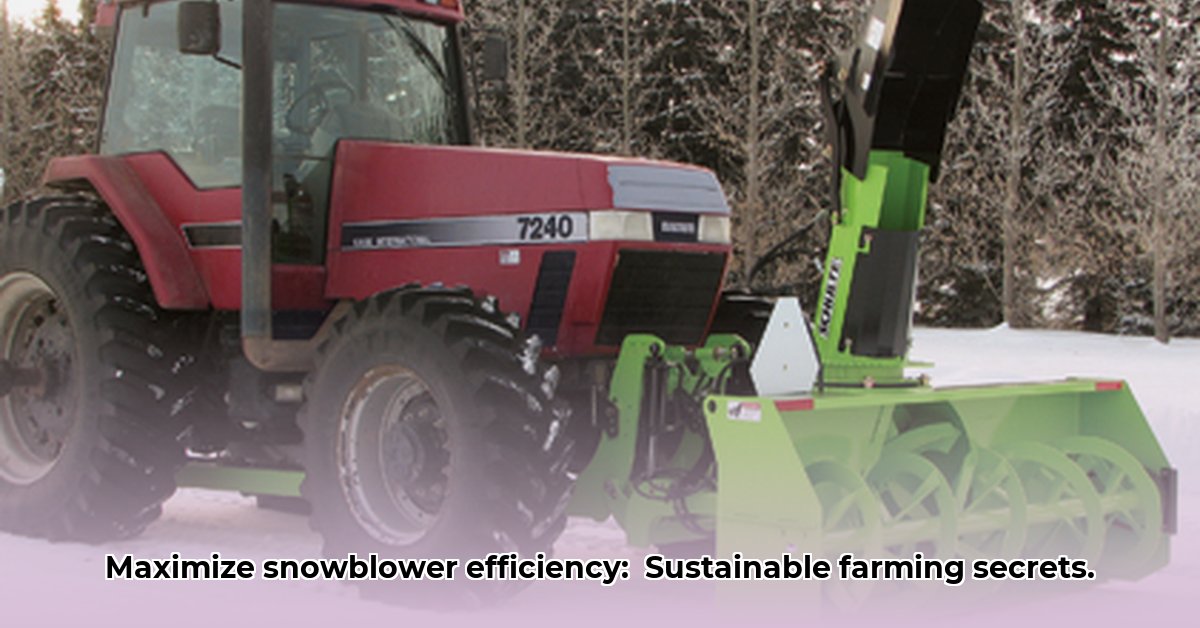
Snowblower Selection for Efficient and Sustainable Winter Farm Operations
Winter presents significant challenges to agricultural operations. Snow accumulation can bury crops, damage equipment, and disrupt schedules. Efficient snow removal is crucial for maintaining productivity and minimizing environmental impact. This report focuses on optimizing snow removal strategies for farms, specifically examining tractor-mounted snowblowers as a sustainable solution. We will analyze factors influencing snowblower selection, provide actionable recommendations for maximizing efficiency, and address potential environmental concerns. For more information on front-mount snowblowers, check out this helpful resource.
Choosing the Right Front-Mount Snowblower: Key Considerations
Selecting an appropriate snowblower requires a careful assessment of several key factors. Farm size, typical snowfall amounts, and terrain significantly influence the required snowblower capacity and power. A small orchard with light snowfall may only require a smaller, lighter-duty model, unlike a large operation experiencing heavy snowfall which necessitates a more powerful and robust machine.
The ease and speed of attachment are also critical. Quick-attach systems significantly reduce downtime, optimizing efficiency and minimizing labor. Durability is paramount; the snowblower must withstand harsh winter conditions and rigorous use. A high-quality, durable machine represents a long-term investment offering better value and reducing the need for frequent replacements. Finally, fuel efficiency contributes to both economic and environmental sustainability; minimizing fuel use reduces operating costs and lowers the machine's carbon footprint.
Optimizing Snowblower Performance: Operational Strategies and Maintenance
Maximizing snowblower effectiveness requires more than simply selecting the right model. Strategic snow removal practices enhance efficiency and minimize fuel consumption. For example, considering wind direction allows for more effective snow clearing, preventing unnecessary movement and re-work. This approach mimics strategies used in fall leaf clearing, utilizing natural forces to improve results.
Regular maintenance is equally crucial. Adhering to manufacturer recommendations ensures optimal performance and longevity. Sharp blades are essential for efficient snow removal; dull blades increase effort, wear and increase fuel consumption. This parallels the difference between using a sharp knife versus a dull one in the kitchen – sharpness significantly impacts efficiency. Consistent maintenance significantly reduces breakdowns and maximizes operational uptime.
Sustainable Snow Removal: Beyond Fuel Efficiency
Sustainable farming encompasses a holistic approach, encompassing environmental considerations beyond fuel efficiency. Tractor-mounted snowblowers generally prove more efficient than manual methods, reducing both labor and fuel costs. However, sustainability extends beyond fuel efficiency. Investing in a durable snowblower that lasts significantly longer minimizes the need for frequent replacements, reducing waste and lowering the environmental impact over the lifespan of the equipment. Responsible end-of-life disposal, including exploring recycling components, furthers this commitment to environmental stewardship.
Comparative Analysis of Snowblower Brands: Addressing Data Gaps
Several manufacturers produce tractor-mounted snowblowers, including established brands such as Erskine and New Holland. While many offer quick-attach systems, often claiming attachment times around 5 minutes, comprehensive independent testing comparing fuel efficiency and overall performance across brands is limited. This lack of readily available comparative data hinders informed decision-making regarding true long-term sustainability. Further research and independent testing are needed to provide farmers with objective, data-driven insights.
Actionable Steps for Sustainable Snow Removal: A Practical Guide
Implementing sustainable snow removal requires a structured approach. The following numbered steps outline a practical framework for integrating sustainable practices:
Assess Your Needs: Evaluate your farm's unique characteristics (size, terrain, typical snowfall) to determine the optimal snowblower size and capacity. This crucial step informs purchasing decisions.
Prioritize Fuel Efficiency: Research models known for fuel efficiency, considering engine technology and design features. Look for engines with advanced fuel injection systems and optimized combustion.
Invest in Preventative Maintenance: Regular maintenance prevents costly repairs and improves reliability. This extends the lifespan of your investment.
Develop a Smart Snow Removal Plan: Plan routes carefully, considering wind direction and snowdrift patterns. This can significantly reduce fuel consumption.
Managing Risks Associated with Tractor-Mounted Snowblowers
Operating a tractor-mounted snowblower involves inherent risks that require mitigation strategies. The following table summarizes potential risks, their likelihood, impact, and recommended mitigation strategies:
| Risk Factor | Likelihood | Impact | Mitigation Strategy |
|---|---|---|---|
| Equipment Malfunction | Medium | High | Regular maintenance, operator training, adherence to the owner's manual |
| Soil Compaction | High | Medium | Strategic snow removal routes, lighter-weight models, proper tire inflation |
| Excessive Fuel Consumption | High | Medium | Fuel-efficient models, optimized operation techniques, minimizing idling |
Conclusion: Investing in Sustainable Snow Removal
Implementing sustainable snow removal isn't merely about acquiring new equipment; it signifies a commitment to efficient and responsible farming practices. By carefully considering the factors discussed, and prioritizing fuel-efficient models and smart operational strategies, farmers can significantly reduce their environmental footprint while enhancing operational efficiency and long-term profitability. Further research into the long-term impacts of snow removal equipment on soil health remains a critical area for future investigation.